No products in the cart.
Nestled in the formidable shadow of the colossal Great Temple of Ramses II at Abu Simbel lies a treasure of equal allure but distinct character—the Small Temple of Abu Simbel, or as it is reverently known, the Temple of Hathor. This enchanting edifice is dedicated to Hathor, the goddess of love and joy, and to Queen Nefertari, beloved wife of Ramses II. Unlike any typical tribute, this temple uniquely honors its royal and divine subjects side by side, reflecting the profound esteem Ramses held for his queen.
Nestled in the formidable shadow of the colossal Great Temple of Ramses II at Abu Simbel lies a treasure of equal allure but distinct character—the Small Temple of Abu Simbel, or as it is reverently known, the Temple of Hathor. This enchanting edifice is dedicated to Hathor, the goddess of love and joy, and to Queen Nefertari, beloved wife of Ramses II. Unlike any typical tribute, this temple uniquely honors its royal and divine subjects side by side, reflecting the profound esteem Ramses held for his queen.
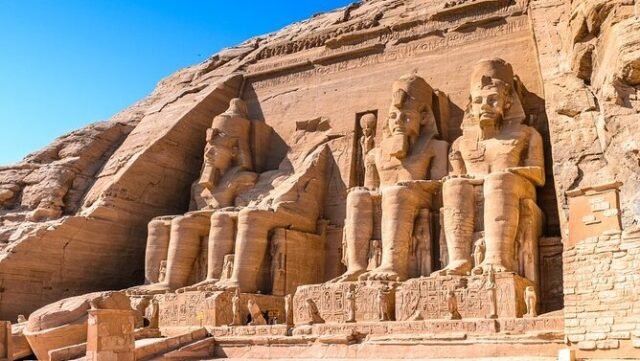
Upon approaching the temple, visitors are greeted by a striking facade, adorned with six statues that stand as silent sentinels to history and heritage. Prominently, Queen Nefertari is depicted at a monumental scale, matching that of Ramses himself—a rarity in Egyptian art that signifies her exceptional status. This statuary arrangement is unique for a Pharaonic temple, not only featuring the queen at the same height as the king but also flanked by smaller figures of their princes and princesses, reinforcing the familial aspect of this sacred space.
Step inside, and the interior continues to tell tales of reverence and celebration, albeit in a more subdued artistic language compared to its grand neighbor. Here, the walls vividly depict Nefertari and Ramses engaged in ritual acts, paying homage to the gods Hathor and Mut, with Nefertari herself elevated to a divine status, shining in celestial glory amidst the carvings. The hall, simpler yet significant, features six pillars adorned with the serene face of Hathor, adding a distinctive aesthetic to the temple’s design.
The interior not only honors the queen and the goddess but also showcases Ramses’s prowess as a warrior. Carvings of Ramses in battle adorn the walls, symbolizing his victories and strength. Unlike the Great Temple, this space is structured with three rows of two pillars each, all crowned with the image of Hathor, contributing to the temple’s unique ambiance.
In the heart of the temple, a prominent carving of Hathor, depicted as a sacred cow-goddess, emerges from the Western Mountain, symbolizing rebirth and nurturing. Surrounding the antechamber, vivid depictions of Hathor in her sacred boat are complemented by side chambers that resemble caves, carved directly from the rock, enhancing the mythological narrative of the space.
Nestled in the formidable shadow of the colossal Great Temple of Ramses II at Abu Simbel lies a treasure of equal allure but distinct character—the Small Temple of Abu Simbel, or as it is reverently known, the Temple of Hathor. This enchanting edifice is dedicated to Hathor, the goddess of love and joy, and to Queen Nefertari, beloved wife of Ramses II. Unlike any typical tribute, this temple uniquely honors its royal and divine subjects side by side, reflecting the profound esteem Ramses held for his queen.
Nestled in the formidable shadow of the colossal Great Temple of Ramses II at Abu Simbel lies a treasure of equal allure but distinct character—the Small Temple of Abu Simbel, or as it is reverently known, the Temple of Hathor. This enchanting edifice is dedicated to Hathor, the goddess of love and joy, and to Queen Nefertari, beloved wife of Ramses II. Unlike any typical tribute, this temple uniquely honors its royal and divine subjects side by side, reflecting the profound esteem Ramses held for his queen.
In the heart of the temple, a prominent carving of Hathor, depicted as a sacred cow-goddess, emerges from the Western Mountain, symbolizing rebirth and nurturing. Surrounding the antechamber, vivid depictions of Hathor in her sacred boat are complemented by side chambers that resemble caves, carved directly from the rock, enhancing the mythological narrative of the space.
Nestled in the formidable shadow of the colossal Great Temple of Ramses II at Abu Simbel lies a treasure of equal allure but distinct character—the Small Temple of Abu Simbel, or as it is reverently known, the Temple of Hathor. This enchanting edifice is dedicated to Hathor, the goddess of love and joy, and to Queen Nefertari, beloved wife of Ramses II. Unlike any typical tribute, this temple uniquely honors its royal and divine subjects side by side, reflecting the profound esteem Ramses held for his queen.
Nestled in the formidable shadow of the colossal Great Temple of Ramses II at Abu Simbel lies a treasure of equal allure but distinct character—the Small Temple of Abu Simbel, or as it is reverently known, the Temple of Hathor. This enchanting edifice is dedicated to Hathor, the goddess of love and joy, and to Queen Nefertari, beloved wife of Ramses II. Unlike any typical tribute, this temple uniquely honors its royal and divine subjects side by side, reflecting the profound esteem Ramses held for his queen.
In the heart of the temple, a prominent carving of Hathor, depicted as a sacred cow-goddess, emerges from the Western Mountain, symbolizing rebirth and nurturing. Surrounding the antechamber, vivid depictions of Hathor in her sacred boat are complemented by side chambers that resemble caves, carved directly from the rock, enhancing the mythological narrative of the space.
Nestled in the formidable shadow of the colossal Great Temple of Ramses II at Abu Simbel lies a treasure of equal allure but distinct character—the Small Temple of Abu Simbel, or as it is reverently known, the Temple of Hathor. This enchanting edifice is dedicated to Hathor, the goddess of love and joy, and to Queen Nefertari, beloved wife of Ramses II. Unlike any typical tribute, this temple uniquely honors its royal and divine subjects side by side, reflecting the profound esteem Ramses held for his queen.
Nestled in the formidable shadow of the colossal Great Temple of Ramses II at Abu Simbel lies a treasure of equal allure but distinct character—the Small Temple of Abu Simbel, or as it is reverently known, the Temple of Hathor. This enchanting edifice is dedicated to Hathor, the goddess of love and joy, and to Queen Nefertari, beloved wife of Ramses II. Unlike any typical tribute, this temple uniquely honors its royal and divine subjects side by side, reflecting the profound esteem Ramses held for his queen.
In the heart of the temple, a prominent carving of Hathor, depicted as a sacred cow-goddess, emerges from the Western Mountain, symbolizing rebirth and nurturing. Surrounding the antechamber, vivid depictions of Hathor in her sacred boat are complemented by side chambers that resemble caves, carved directly from the rock, enhancing the mythological narrative of the space.
Nestled in the formidable shadow of the colossal Great Temple of Ramses II at Abu Simbel lies a treasure of equal allure but distinct character—the Small Temple of Abu Simbel, or as it is reverently known, the Temple of Hathor. This enchanting edifice is dedicated to Hathor, the goddess of love and joy, and to Queen Nefertari, beloved wife of Ramses II. Unlike any typical tribute, this temple uniquely honors its royal and divine subjects side by side, reflecting the profound esteem Ramses held for his queen.
Nestled in the formidable shadow of the colossal Great Temple of Ramses II at Abu Simbel lies a treasure of equal allure but distinct character—the Small Temple of Abu Simbel, or as it is reverently known, the Temple of Hathor. This enchanting edifice is dedicated to Hathor, the goddess of love and joy, and to Queen Nefertari, beloved wife of Ramses II. Unlike any typical tribute, this temple uniquely honors its royal and divine subjects side by side, reflecting the profound esteem Ramses held for his queen.
In the heart of the temple, a prominent carving of Hathor, depicted as a sacred cow-goddess, emerges from the Western Mountain, symbolizing rebirth and nurturing. Surrounding the antechamber, vivid depictions of Hathor in her sacred boat are complemented by side chambers that resemble caves, carved directly from the rock, enhancing the mythological narrative of the space.
Nestled in the formidable shadow of the colossal Great Temple of Ramses II at Abu Simbel lies a treasure of equal allure but distinct character—the Small Temple of Abu Simbel, or as it is reverently known, the Temple of Hathor. This enchanting edifice is dedicated to Hathor, the goddess of love and joy, and to Queen Nefertari, beloved wife of Ramses II. Unlike any typical tribute, this temple uniquely honors its royal and divine subjects side by side, reflecting the profound esteem Ramses held for his queen.
Nestled in the formidable shadow of the colossal Great Temple of Ramses II at Abu Simbel lies a treasure of equal allure but distinct character—the Small Temple of Abu Simbel, or as it is reverently known, the Temple of Hathor. This enchanting edifice is dedicated to Hathor, the goddess of love and joy, and to Queen Nefertari, beloved wife of Ramses II. Unlike any typical tribute, this temple uniquely honors its royal and divine subjects side by side, reflecting the profound esteem Ramses held for his queen.
In the heart of the temple, a prominent carving of Hathor, depicted as a sacred cow-goddess, emerges from the Western Mountain, symbolizing rebirth and nurturing. Surrounding the antechamber, vivid depictions of Hathor in her sacred boat are complemented by side chambers that resemble caves, carved directly from the rock, enhancing the mythological narrative of the space.
Experience the splendor of Egypt with fellow explorers from around the globe, enjoying top-tier services at unbeatable prices and making unforgettable connections.
Company
Get to Know
Our Services
